





A Scholarly Account · History & Heritage
The History Of The “Maa Kamakhya Temple” Complex
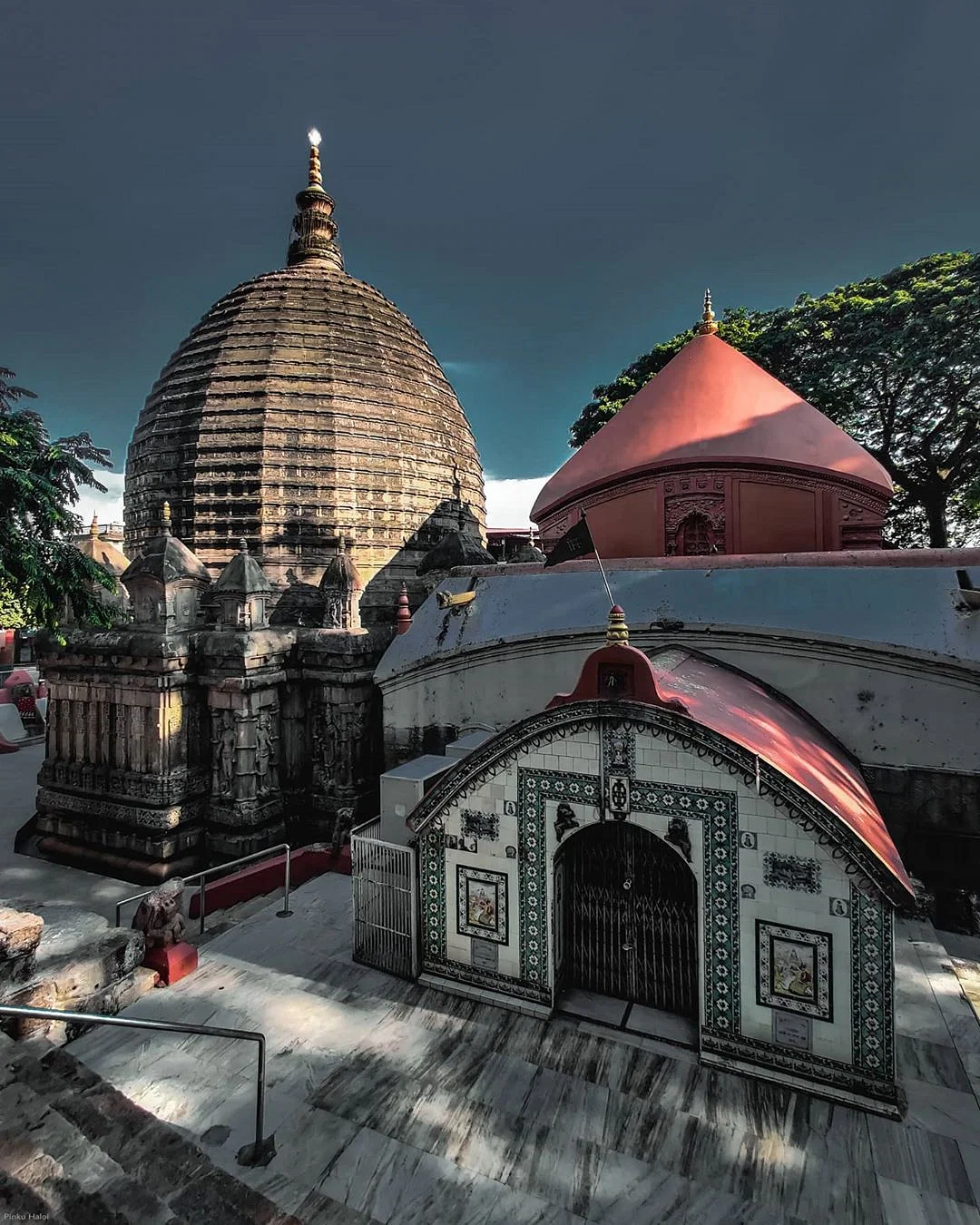
Upon nilachal hill above the brahmaputra, in guwahati, assam, stands one of the most ancient and revered seats of shakti worship in the world: The Sacred Abode Of Maa Kamakhya. The Temple Complex is at once a living place of pilgrimage and a layered monument of history, where the Sacred tradition of the Shakti Peetha meets a documented past of texts, inscriptions, dynasties, ruin and rebuilding. This account holds the two streams apart with care: the Sacred legend is told as the Sacred tradition holds it, while the documented history is set down from the textual, epigraphic and architectural record.
The Sacred Abode Upon nilachal hill
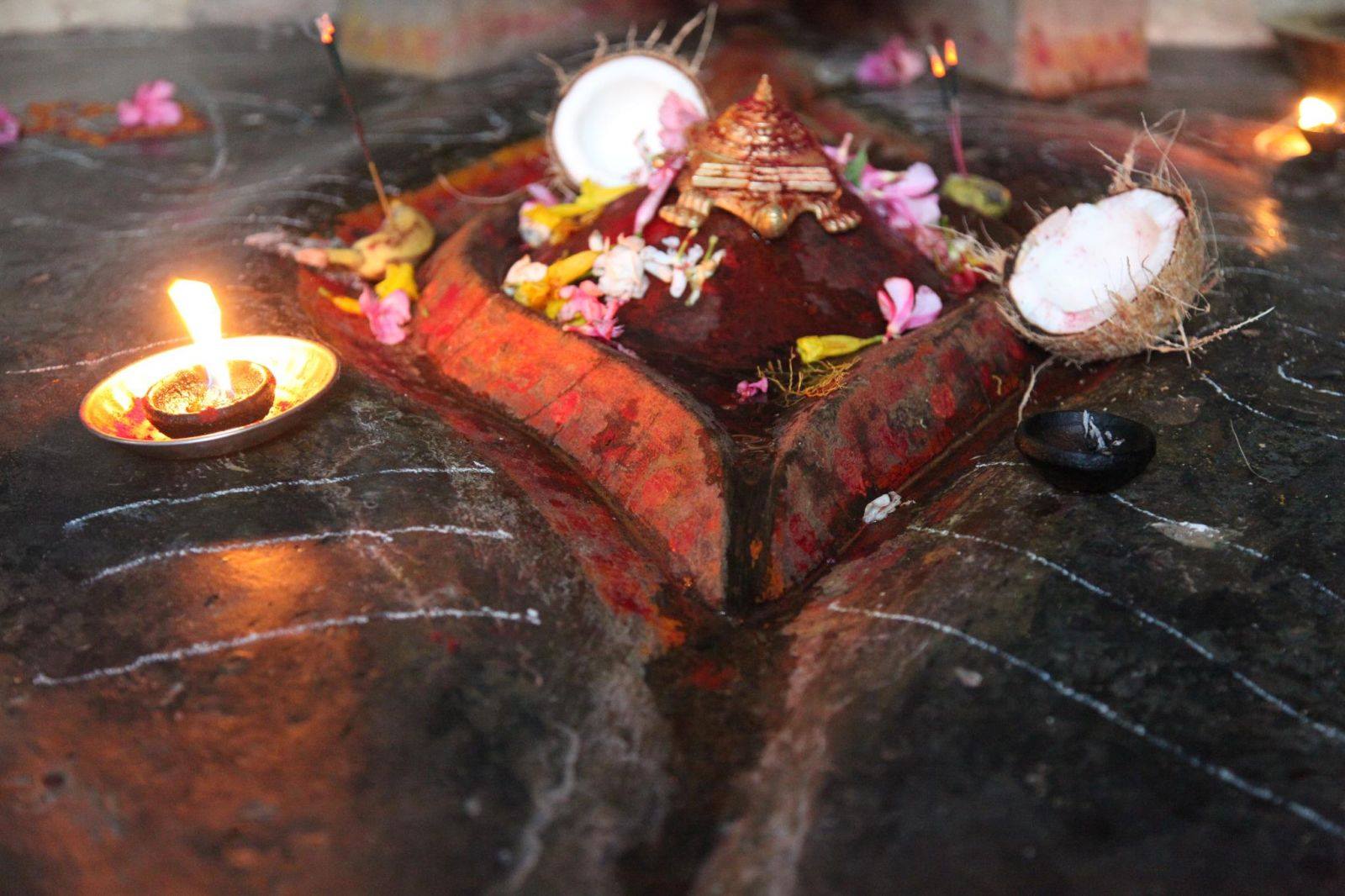
The Temple sits upon nilachal (also nilshaila) hill, overlooking the brahmaputra river in the kamrup metropolitan district of assam. It is widely regarded as a foremost centre of tantra and shakta worship, and nilachal carries not The Temple Of Maa Kamakhya alone but the Temples of the dasha mahavidya, the ten great goddesses, making it a complex rather than a single Temple. The most striking fact of The Sanctum is this: there is no anthropomorphic idol within. The Divine Mother Maa Kamakhya Is “Worshipped” In The Form Of A yoni-like cleft in the rock of a cave Temple that lies below ground level, reached by narrow, steep stone steps, and Kept Forever Moist by an underground perennial spring.
The Origin In Sacred Tradition
Sacred Tradition
The narratives in this section are told as the Sacred tradition holds them, distinct from the documented record that follows.
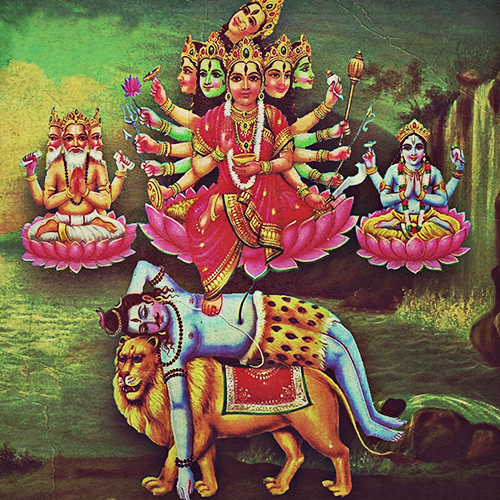
In the Sacred tradition of the Shakti Peethas, The Temple’s origin is told through Mata Sati. The legend recounts that Mata Sati, the consort of lord shiva and daughter of king daksha, gave up her body after her father slighted lord shiva at his great sacrifice; the grieving lord shiva bore her form across the worlds in his dance of sorrow, until the parts of that form fell to earth, and each place where a part descended became a Shakti Peetha. At nilachal, it is held, The Divine Mother's Sacred yoni descended, and the hill turned blue, from which it took the name nilachal, the blue hill.
A second Sacred telling joins to The Name itself. When kamadeva, the deva of love, was reduced to ashes by the fire of lord shiva’s glance, he is said to have regained his form by “Worshipping” The Divine Mother upon nilachal; from this the land was called kamarupa, the place where kama recovered his rupa, his form, and The Divine Mother, Maa Kamakhya, The Divine Mother By Whose Grace desire itself is restored. These are the Sacred narratives of the tradition, and are held here as such, distinct from the documented record that follows.
At nilachal, it is held, The Divine Mother's Sacred yoni descended, and the hill turned blue, from which it took the name nilachal, the blue hill.
From The Sacred Tradition
The Name & The Question Of Origins
The derivation of kamarupa from kamadeva is the traditional sanskritic account of The Name. Modern scholarship offers a second, linguistic reading. In his study The Mother Goddess Kamakhya (1948), the scholar banikanta kakati traced kamarupa to pre-aryan, austroasiatic roots (forms such as kamru or kamrut), suggesting that the kamadeva story is a later sanskritic overlay upon a far older indigenous goddess. The two readings need not war: the devotional tradition keeps the legend of kama, while the academic record gives weight to the older substratum of the name.
Among The Oldest Seats Of Shakti
Kamakhya is counted among the very oldest of the great shakta seats. The earliest tantric texts name only four such pithas, and kamarupa stands among them, alongside the seats traditionally identified as oddiyana, jalandhara and purnagiri. In the later and more popular reckoning, Kamakhya is named among the fifty-one Shakti Peethas, and is often called the holiest and oldest of them. The count itself is not fixed across the scriptures (some traditions give one hundred and eight, the oldest tantric texts give four), so the figure of fifty-one is best understood as the popular Shakta count; Kamakhya’s strongest and oldest claim is its place among the original four.
The Witness Of Texts & Inscriptions
Documented History
From here the account is set down from the textual, epigraphic and architectural record.
The documented antiquity of the site rests on a clear line of texts and inscriptions:
- The Hevajra Tantra (a buddhist yogini-tantra, commonly placed around the eighth century, within a range from the late eighth to early tenth): one of the earliest lists of the four great pithas, naming kamarupa among them. It attests the seat of kamarupa even before any specific mention of “Kamakhya” by name.
- The tezpur copper plates (ninth century) of vanamalavarmadeva of the mlechchha dynasty: the first epigraphic mention of The Divine Mother Maa Kamakhya by name, anchoring The Divine Mother's Worship in the documented kamarupa era.
- The Kalika Purana (a shakta upapurana composed in the kamarupa region, mainstream dating to about the tenth to early eleventh century, though its sections span a wider range): it gives the canonical account of Her descent at nilachal, glorifies The Divine Mother, and sets down Her “Worship” and the rites of the tantric tradition.
- The Yogini Tantra (a shakta tantra of assam, much later, of the sixteenth to seventeenth century): foundational for the left-hand kaula practice, it centres upon Maa Kali And Maa Kamakhya and dwells upon the creative symbolism Of The yoni.
The Early Temple & The Medieval Destruction
The standing Temple is structurally dated to about the eighth to ninth century, with many later rebuildings; some archaeological evidence points to still earlier structures of the fifth to seventh century. Apart from the reconstruction of 1565, however, the early building dates remain estimates rather than settled fact.
At some point before 1565 the earlier Temple was destroyed. Popular tradition has long blamed the iconoclast kalapahar, a general active in the late sixteenth century. Scholarship, however, leans to an earlier ruin, during the invasion of the kamata kingdom by hussain shah around 1498, for the rebuilding of 1565 predates kalapahar’s campaigns, and he is not thought to have reached so far east. The earlier attribution to hussain shah’s invasion is therefore the sounder reading of the destruction.
The rebuilding of 1565 is the one firmly dated construction in the long history of the site.
The Documented Record
The Koch Reconstruction Of 1565
The revival of Worship at the site began under the koch king vishwa singha (who reigned roughly 1515 to 1540). The standing Temple was then rebuilt in 1565 under his son, king nara narayan, with the reconstruction supervised by his brother, the general chilarai. When attempts in stone failed, the koch artisan meghamukdam raised the distinctive brick dome that crowns The Temple to this day, giving rise to the hybrid form known as the nilachal style. The rebuilding of 1565 is the one firmly dated construction in the long history of the site.
The Architecture Of The Temple
The present Temple belongs to this hybrid nilachal type: a hemispherical brick shikhara, the koch-era innovation, set above the older sanctum, with the assembly halls extending before it. At its heart, the garbhagriha is small, dark and below ground level, reached by narrow, steep stone steps. Within, a sloping sheet of stone descends to a yoni-like cleft, about ten inches deep, that is kept perpetually filled by the underground spring. Here, in this living rock and water rather than in any carved image, The Divine Mother Maa Kamakhya Is “Worshipped”.
Ahom Patronage
After the koch reconstruction, The Temple passed, through the seventeenth and eighteenth centuries, under the patronage of the ahom kings, whose endowments and embellishments sustained and adorned the nilachal complex through the later medieval age.
The Wider Dasha Mahavidya Complex
Nilachal is not the abode of Maa Kamakhya alone. The hill holds the Temples of the dasha mahavidya, the ten great goddesses of the tantric tradition, gathered about The Temple. It is this constellation of Temples, together with the saubhagya-kunda tank and the lesser sanctuaries, that makes nilachal a complex and a foremost seat of the yogini and mahavidya traditions, rather than a single Temple upon a hill.
The Living Significance
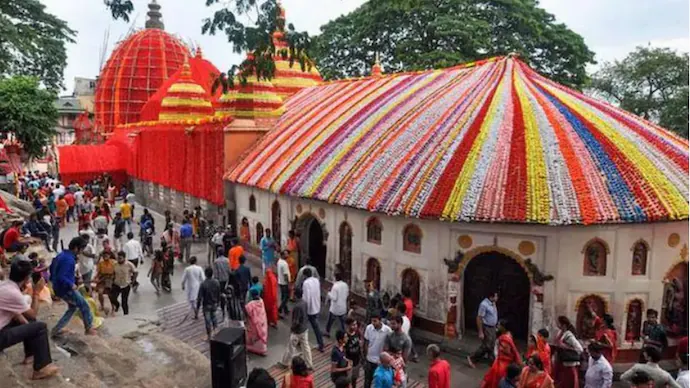
For all the weight of its history, The Temple Of Maa Kamakhya is above all a living place of worship. It remains a premier centre of shakta and tantric pilgrimage, and each year, at the Ambubachi Mela, it draws several lakh devotees, sadhus and seekers from india and the world to honour The Annual Cycle Of The Divine Mother, an event so vast it is called the “mahakumbh of the east”. In the closing and reopening of The Sanctum, the most ancient symbolism of the site, the creative, life-giving power Of The Divine Mother, is renewed before the eyes of the living.
May The Divine Mother Bless All.
Jai Maa Kamakhyar Jai
A note on sources and dating: the Shakti Peetha and kamadeva narratives are recorded here as Sacred tradition, not as documented history. Dates for the Hevajra Tantra (about the eighth century), the Kalika Purana (about the tenth century, with sections of wider range), and the early structures (fifth to ninth century) are scholarly estimates; only the koch reconstruction of 1565 is firmly dated. This account draws on the Assam Government tourism record, the standard reference literature on the Temple, and banikanta kakati’s The Mother Goddess Kamakhya (1948).